What’s New inside DigitalCNC (March 2026)
March delivered on every front. New partnerships, technical insight that changes how engineers think about CAM, a team reset, research investment, and recognition that means something. Here is everything that happened.
The Surface Finish Problem Starts Before the First Cut

We published a piece this month that engineers keep getting wrong. Not because they lack skill, but because CAM gives them no visibility into machine behaviour.
CAM tolerance is treated as a geometry decision. It is actually a machine-specific decision, made without any data about the machine that will run the code. Too loose and you get geometric faceting. Too tight on a high-performance 5-axis machine and you saturate the controller, creating witness marks from feedrate fluctuations, not from bad geometry. The instinctive fix: adding more points only to make it worse.
In a recent aerospace case, CATIA predicted a 60-second cycle. Actual machine time: three and a half minutes. Prove-outs are expensive. Predicting feedrate behaviour before cutting is not.
Carbide Is the New Platinum. Start Programming Like It.

If you have end mills in your tool crib right now, they are about to cost significantly more to replace. This is not a supply chain blip. It is a structural shift.
China controls roughly 82% of global tungsten production. Tightened quotas, export controls, and surging defence demand pushed prices up more than 200% in 2025 alone. One of the world’s largest carbide manufacturers announced 22% average price increases in Q2 2025. Analysts expect elevated prices to hold into 2027.
Dynamic milling, adaptive clearing, and proper entry and exit moves are no longer just best practice. They are cost control. Every prove-out iteration on a constrained 5-axis machine now carries a sharply higher price tag. Nothing quite focuses the mind on toolpath quality like watching a £40 end mill snap on an incorrect entry move.
The full article is now available here. Read it before your next tool order.
We were in Belfast!
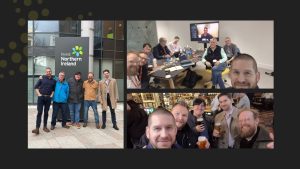
When the market moves this fast, strategy cannot live only at the top. So we took the whole DigitalCNC team to Belfast for a full day reset, hosted by Invest Northern Ireland.
It was a day of honest conversations, clear thinking, and getting everyone around the same table with the same picture of where we are going. That kind of alignment does not happen on a Zoom call.
We came back sharper, more connected as a team and excited about what is ahead. Here are some snapshots from the trip.
Our Webinars are Now Available on Demand
Our webinar recordings are now available on the website, featuring AMRC experts alongside our CEO, Dr Rob Ward.
Conquering the Digital Gap: Advanced CAM, virtual machining, and where DigitalCNC fits in a precision machining workflow. Tune in now.

High-Speed, High-Value: Adaptive milling strategies and high-speed machining validation. Watch it here.

What Is Your CAM System Not Telling You About Your 5-Axis Toolpath?
Simultaneous 5-axis motion produces feedrate fluctuations that leave witness marks and surface defects. CAM cannot show you where or when they will occur. You will not see them until the part is off the machine and the damage is already done.
On 9th April, Rob will be joined by Dr Robert Carroll and Bethany Cousins, from the AMRC, to tackle this problem head on. Where slowdown zones appear, why 3+2 is often the faster and cleaner choice, and how to validate offline before the toolpath goes anywhere near a spindle.
If you programme 5-axis toolpaths or investigate surface defects, this session was built for the problems you deal with every day. Here’s the link to register, if you haven’t already.

Our CTO Had 30 Seconds to Answer One Question. Watch What He Does With Them.
How does DigitalCNC support turnkey solutions? Our CTO, David Wilkinson answered it without a slide deck, a preamble, or a disclaimer. Short, direct, and worth a few seconds of your time.
We Are Funding the Research That Closes the Gap Between Simulation and Reality
We are proud to be sponsoring an Engineering Doctorate at the University of Sheffield. The mission: build physics-informed machine learning models using Bayesian inference and Gaussian processes that give CAM software a genuine understanding of how individual machines behave.
This is not a thesis that gets shelved. The researcher works embedded with DigitalCNC and the AMRC throughout, with direct involvement from Rob and David. The work feeds into the product.
As Rob put it: “We are unashamedly nerds. We get excited about Gaussian processes and Bayesian inference. If your idea of a good conversation involves machining physics and at least one tangent into science fiction, you will fit right in.”
£28k tax-free stipend. £35k research budget. CEng support. Apply by 22nd April. Open to UK Home students. Share this if you know the right person.
Yorkshire 42 Under 42. Rob’s Response: Right, Back to Work.

Rob was named in Yorkshire’s 42 Under 42 for 2026. His ambition is unchanged: get more world-class research out of universities and into industry. Not trend-chasing, not rebranding existing tools with AI language. Solving hard problems for manufacturers who cannot afford to get it wrong.
DigitalCNC exists because decades of machining research at the University of Sheffield and the AMRC deserved to become a product. This is a reminder of why that work matters.
Congratulations, Rob!
Read more about the announcement here.
April Is Loaded. Stay Close.
Big partnerships. Bigger announcements. The team is genuinely excited about what is coming and we are not in the habit of overpromising.
Follow our LinkedIn page. The next chapter is already in motion.