A Day in the Life of a CAM Programmer Using DigitalCNC
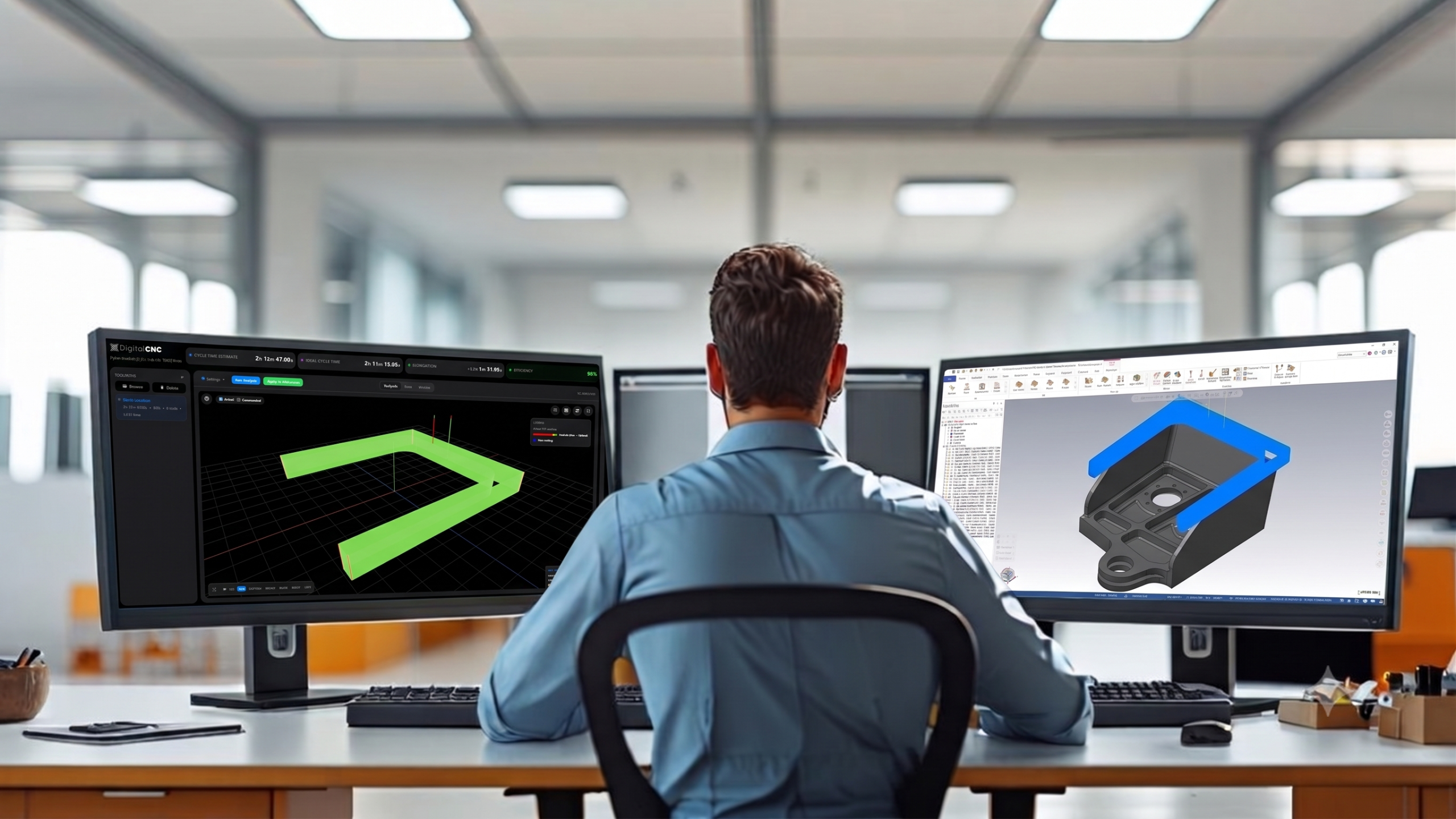
There is a titanium pylon bracket waiting to be programmed. An 860mm Ti-6Al-4V forging, destined for a large horizontal machining centre. It is the kind of part where the stock is expensive, the lead time is long, and the first cut is effectively the only cut. Get it wrong, and the cost is not an hour of rework. It is a scrapped forging and a schedule that slips.
This is the part on the programmer’s screen this morning. Here is how the day goes when DigitalCNC sits alongside the CAM system.
The program that looks finished
By mid morning, the toolpaths are done. Rib top roughing, two levels of roughing, finishing passes on the open faces and the narrow features. In CAM it all looks right: the strategies are sound, the engagement is controlled, the simulation runs clean and the part comes out to shape. On any normal day this is where the program is posted, taken to the machine, and proven out, with the programmer standing at the control, listening to the cut, watching for stutter and dwell, making changes on the floor while the spindle runs and stock is consumed.
Instead, the posted program goes through DigitalCNC first. It does not connect to the machine and it does not read anything off the floor. It runs the posted code through a model of this specific machine and controller, how the look-ahead reads the program, how the axes accelerate and decelerate, where the kinematics constrain the motion, and predicts how that machine will actually drive the toolpath. At the desk, before any metal is touched.
A word on the one number that recurs below. Efficiency here is not a marketing figure. It is how much of the commanded motion the machine will actually realise: the ratio of the feed the machine can hold to the feed the program asks for, along the path. Ninety per cent means the machine delivers nine tenths of what the toolpath assumes. The gap is time the programmer is paying for and cannot see in CAM.
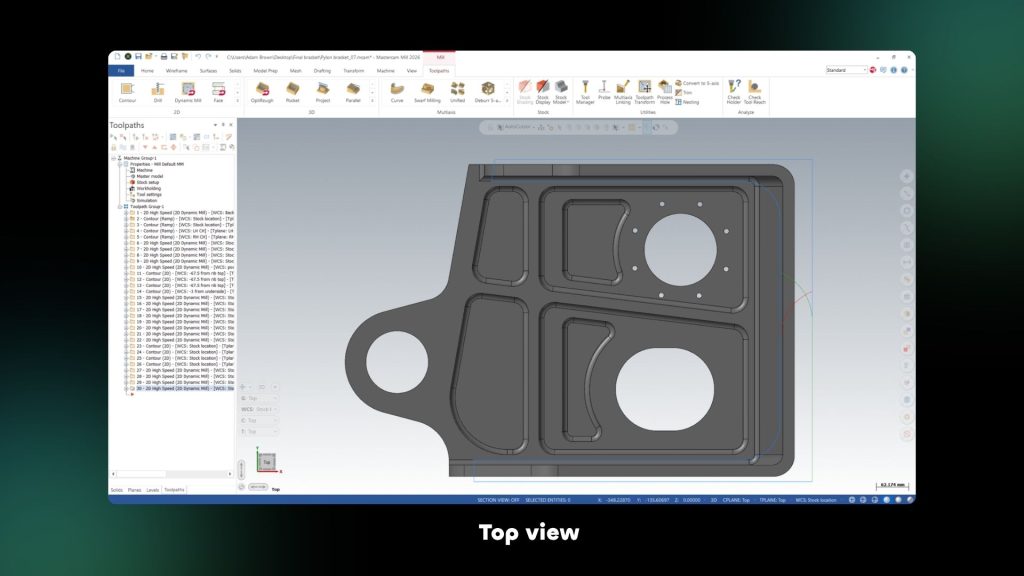
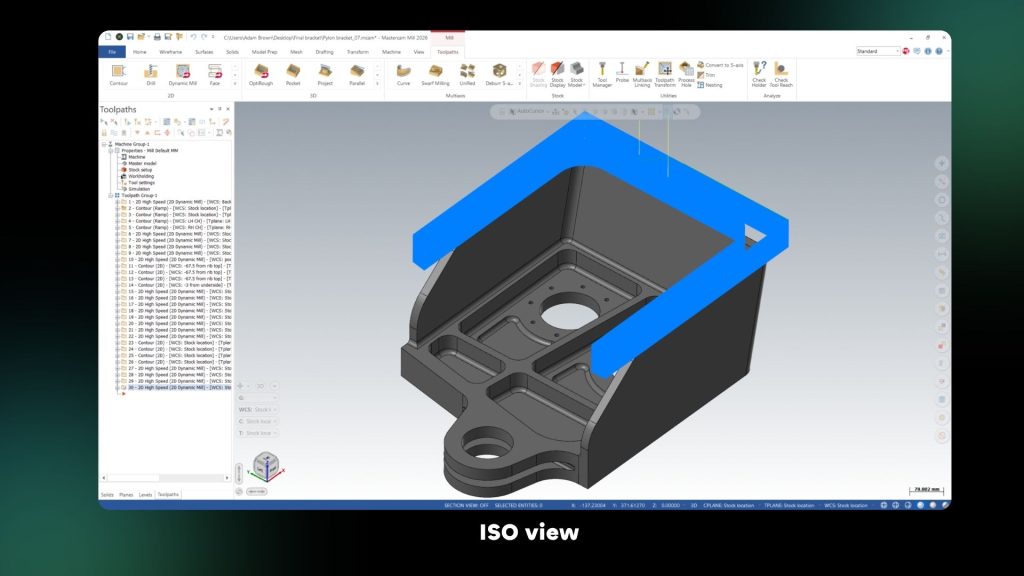
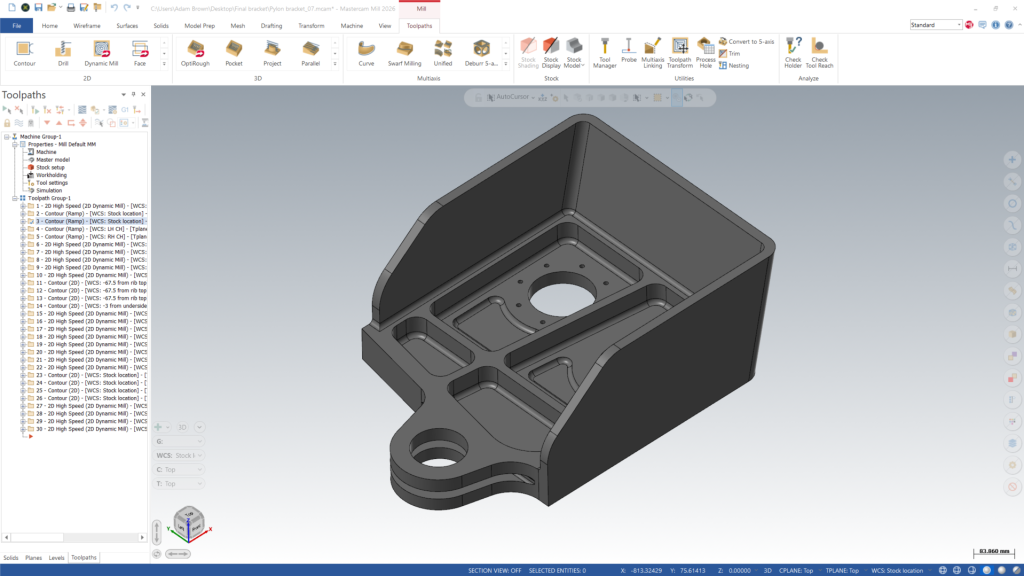
Titanium Pylon Bracket Forging Model in Mastercam
Decision one: the corner the machine cannot turn
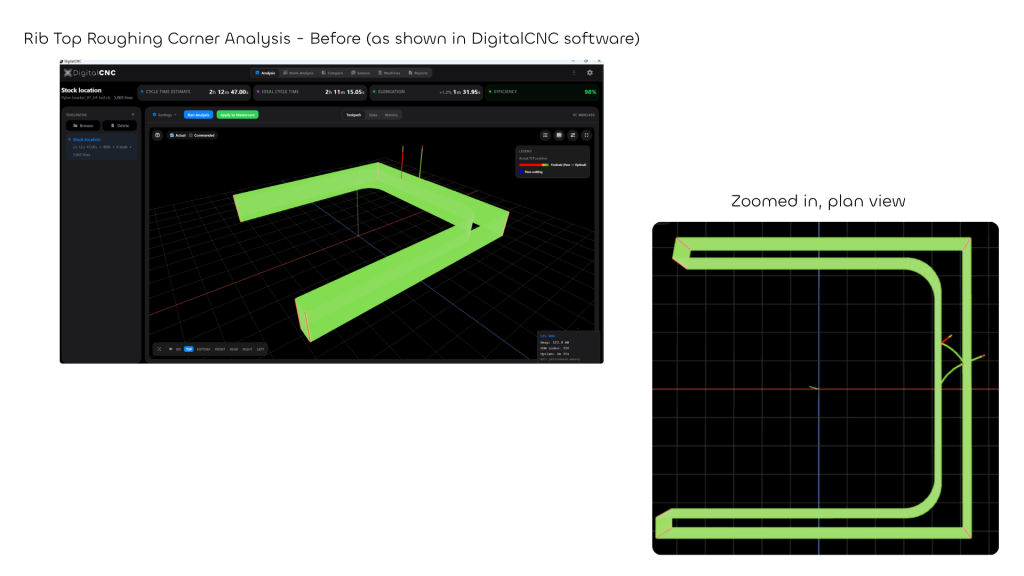
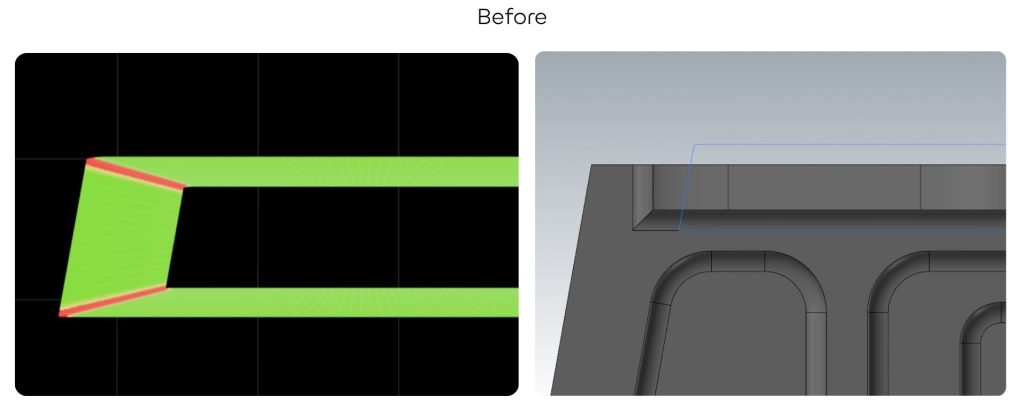
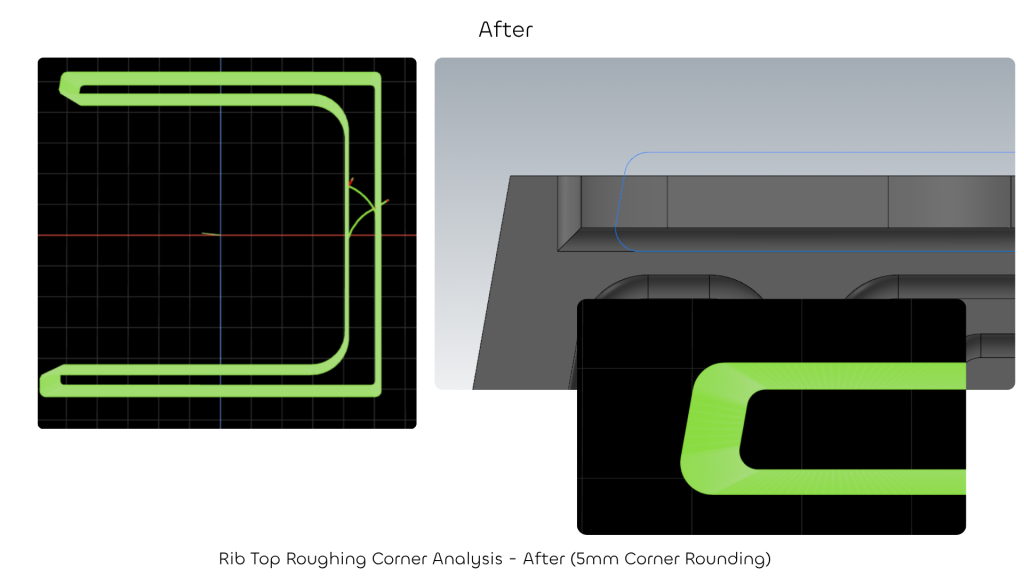
The first thing the analysis surfaces is the rib top roughing. The program commands 2,200 mm/min. The prediction shows that through the corners the machine will only ever deliver 500. The toolpath could not show this, because the toolpath does not know the machine. It would have been the first thing the programmer heard on the floor: the feed dropping away, the cut labouring through every corner.
Now it is a number on the screen instead of a sound on the machine. The fix is made in CAM: allow 5mm of corner rounding where the geometry permits, and the commanded feed returns to where the programmer intended it. One change, made upstream, on evidence rather than instinct.
Decision two: the finishing pass that was quietly underperforming
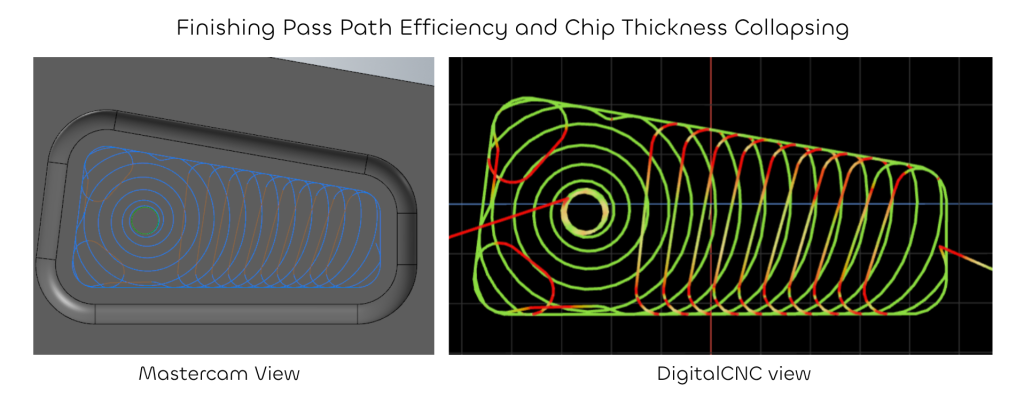
Next is the first finishing pass, running at 82 per cent: the machine is only achieving 20% of commanded feedrate. The analysis shows why. Chip thickness is collapsing at ramp in and ramp out, and on titanium that is the worst place for it, the regime where the tool starts rubbing rather than cutting. The time domain plot shows exactly where along the path it happens.
The programmer opens the tolerance from 25 to 80 microns in the regions where the geometry allows it, and re-analyses. Efficiency comes back to 89 per cent. What matters is not only the recovered time. It is that the decision to relax tolerance was made knowing precisely where it was safe and what it would buy, rather than applied as a blanket guess and discovered on a CMM days later.
Decision three: turning a guess into a defensible number
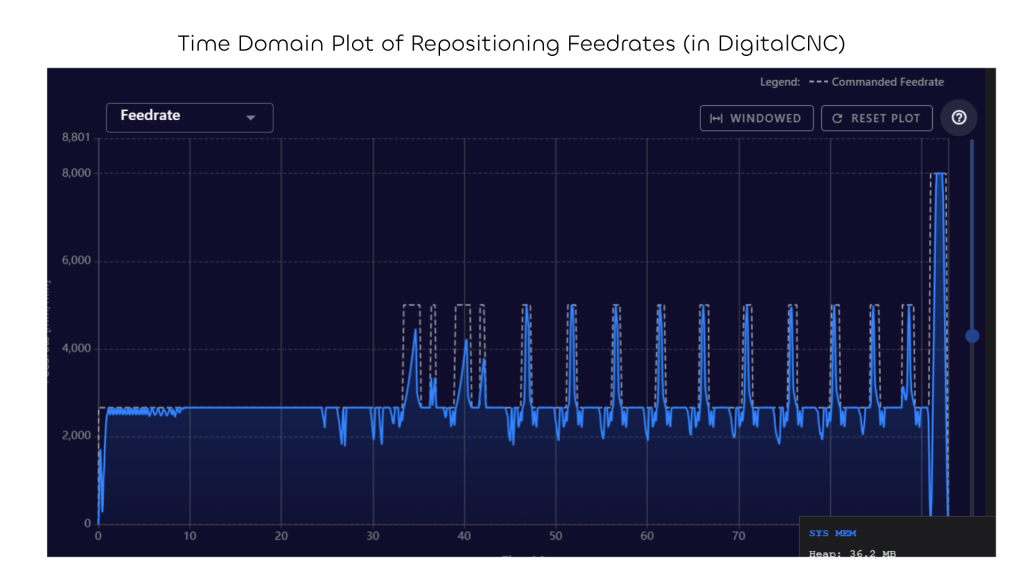
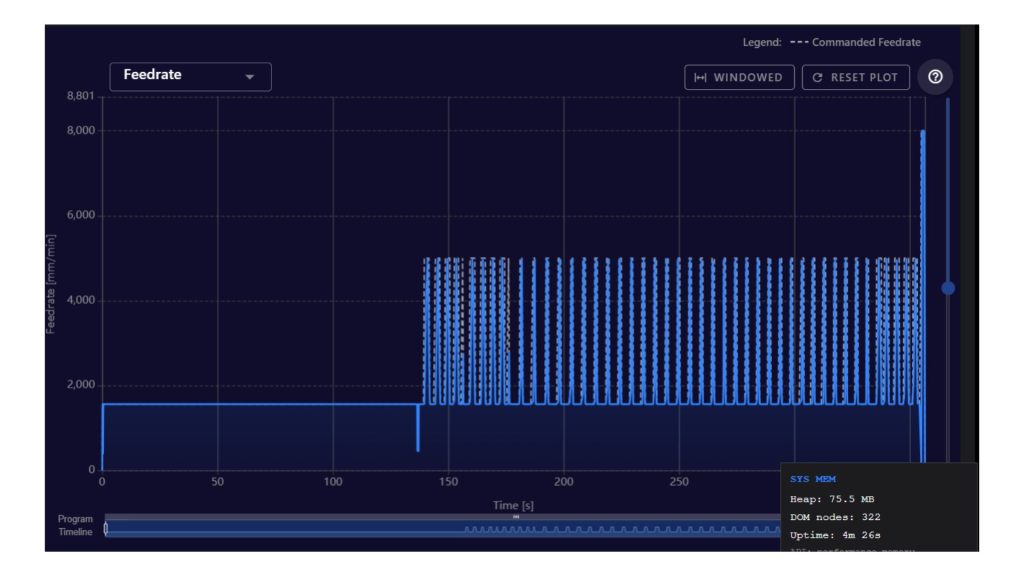
The second level of roughing sits at 90 per cent. Good, and the analysis shows the one thing holding it back: a 5,000 mm/min repositioning feed the programmer had entered as a reasonable estimate. The machine can only deliver 3,000 to 3,500.
That repositioning feed was a guess, the kind every programmer makes a dozen times a day because there is no better number to hand. Now it is replaced with what the machine will actually achieve. The guess becomes a figure the programmer can defend: to a customer, to an estimator, to themselves.
Decision four: protecting the tool on the cut that matters most
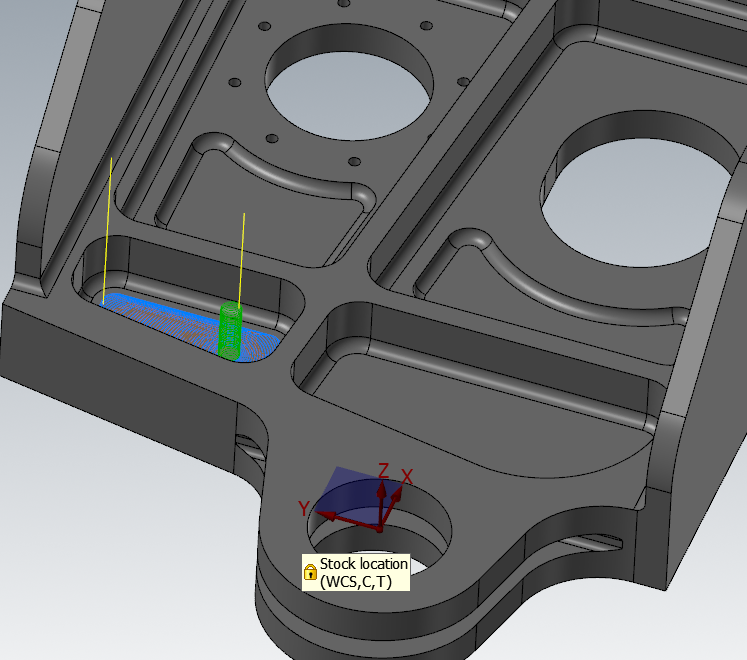
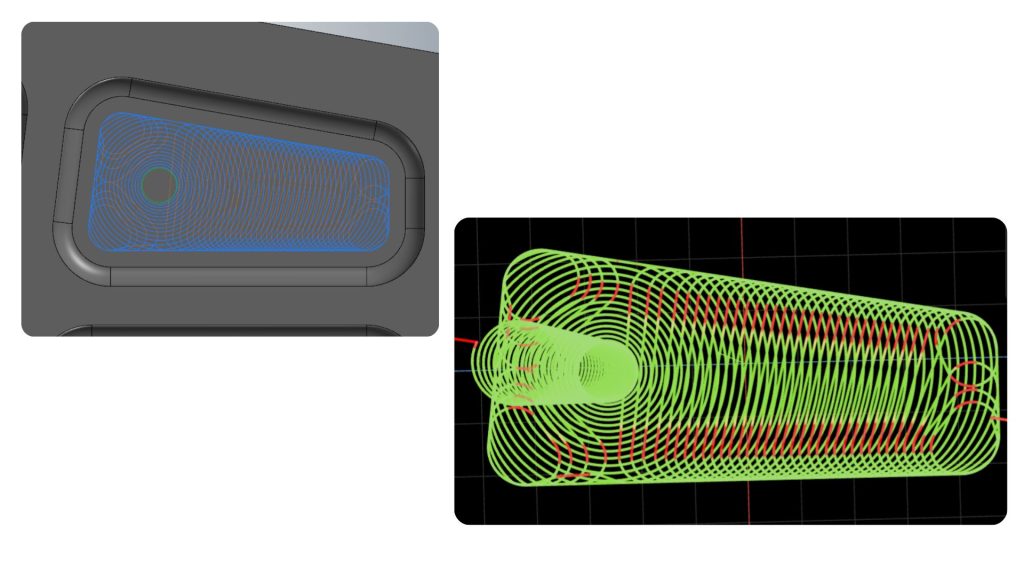
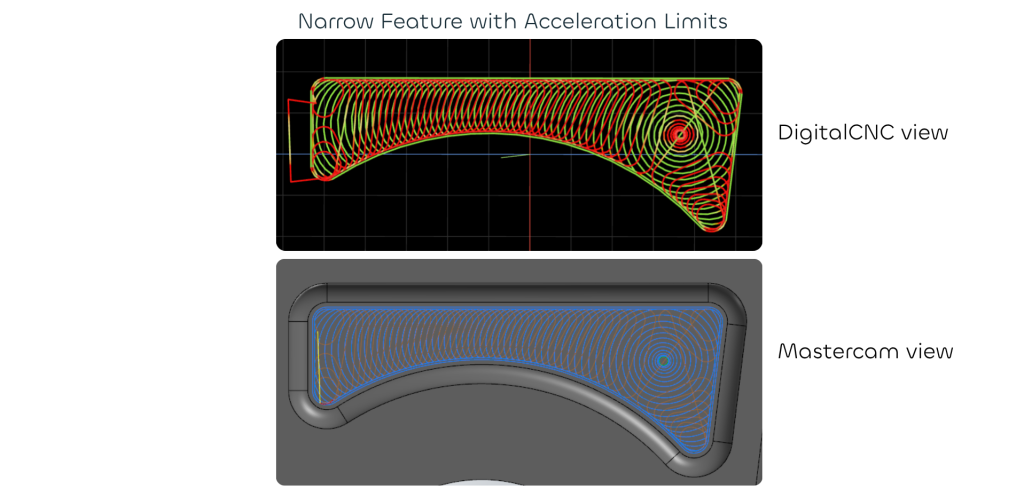
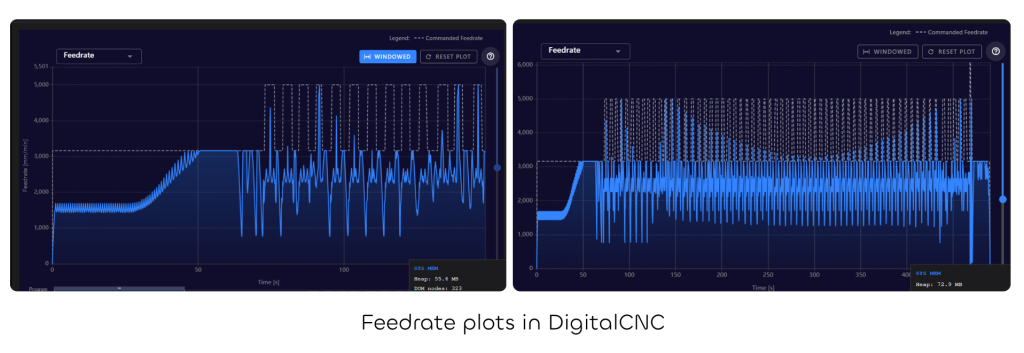
The hardest one is the finishing pass on the narrow features, at 32 per cent, hard against the acceleration limit of the platform. The obvious lever, relaxing tolerance further, is the wrong one here. It would put the tool tip at risk on a slender, vulnerable cut, late in the part, after hours of metal have already been removed. A tool failure or a defect there does not cost a pass. It costs the forging. So the decision goes the other way: bring the surface speed down on this final cut, where a mistake is most expensive and least recoverable, and protect the part the whole day has been building toward.
Not every problem has the same answer. The analysis gives the programmer the information to choose the right lever for each one, instead of applying the same fix everywhere and hoping.
The error you only catch by reading the code
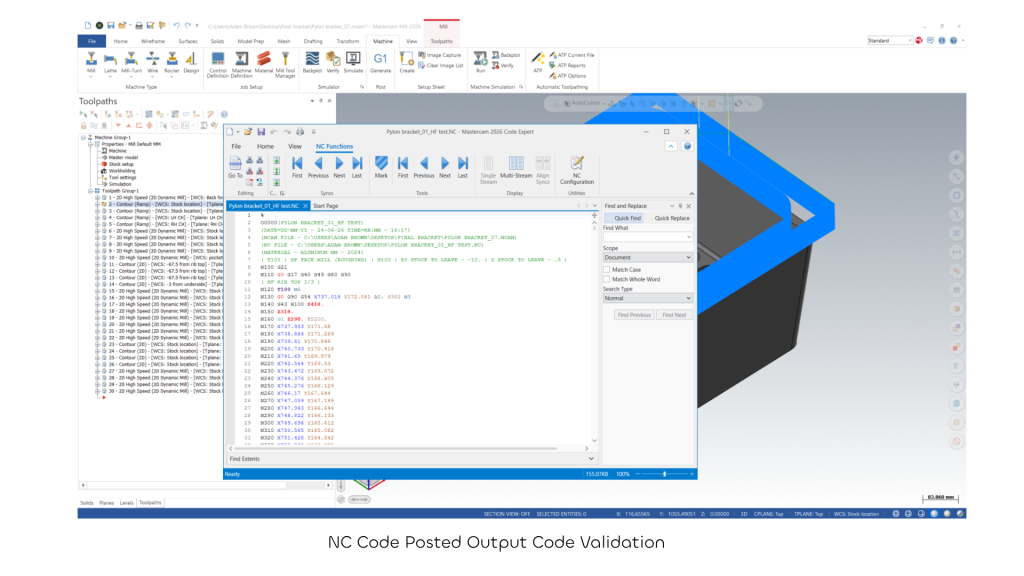
There is one more, and it has nothing to do with feeds or tolerances. While the analysis runs, it flags feed call errors in the posted NC. Not in the toolpath, which was correct, but in the code the post produced from it. These are the errors that survive everything upstream, because the simulation ran the toolpath and the part came out to shape, and the fault is sitting in the posted output where nobody looks until someone reads the file line by line, or until the machine does something unexpected with an expensive forging clamped in it. Here they are caught and corrected before the program leaves the desk. It is the least glamorous part of the day and, on a part like this, quietly one of the most valuable.
The program that reaches the machine validated
By the end of the day the bracket has not been near the spindle, and that is the point. Every problem that would have been found on the machine has been found in CAM. Every fix that would have cost a prove out iteration has been made at the desk: the corner feed, the chip thinning, the repositioning feed, the acceleration limit, the posting errors, all resolved before the first cut.
When the program does reach the machine, the machine confirms it rather than discovers its faults. The forging is cut once, validated against the real machine rather than an assumed one.
What changed
Look at what the programmer did differently. They did not work harder or know more than they did yesterday. They made the same decisions they always make, on feed, tolerance, strategy and surface speed. The difference is that they made them against the real behaviour of the target machine instead of an idealised model, and they made them upstream, where a change costs minutes rather than metal.
That is the day. Same programmer, same part, same levers. A different place to find the problems, a different kind of confidence in the program that goes to the machine, and a forging that is cut once, and cut right.